
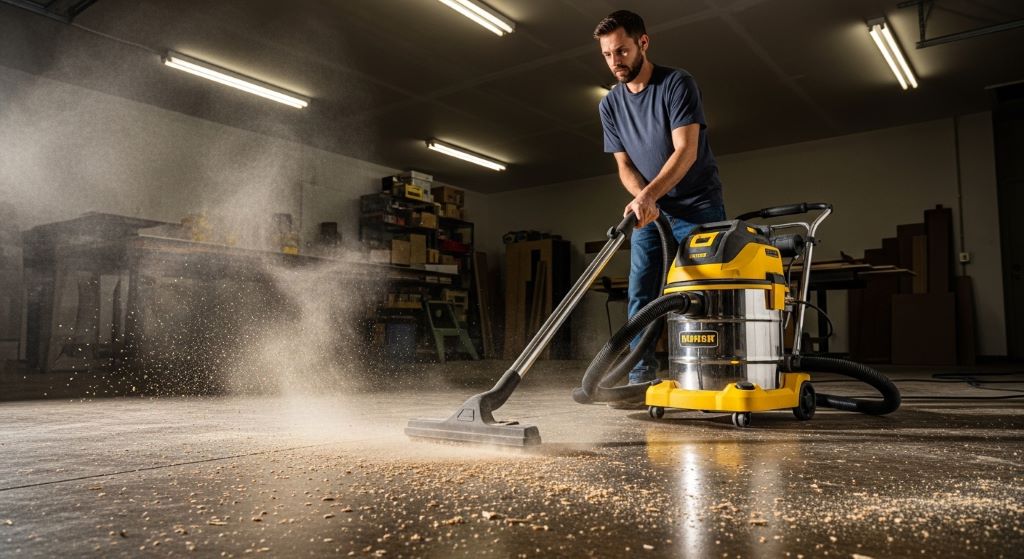
Garages are tough environments to clean. They collect sawdust, metal shavings, gravel, spilled liquids, and all kinds of heavy debris. A regular household vacuum simply cannot handle that level of mess. However, you do not need to spend a fortune to get the job done well. The right budget vacuum can tackle garage grime just as effectively as a premium model — if you know what to look for.
This guide will walk you through everything you need to consider before buying. By the end, you will know exactly how to find a capable, affordable machine that keeps your garage spotless.
Why Garage Cleaning Demands a Different Kind of Vacuum
Most home vacuums are built for carpets and light dust. They struggle with the coarser, heavier material that collects in a garage. Fine sawdust can clog a standard filter quickly. Gravel and screws can crack plastic components. Wet spills can damage motors not built for moisture.
Therefore, a vacuum designed for garage use needs to be tougher in every way. It needs stronger airflow, better filtration, more durable materials, and a larger capacity. Fortunately, many budget-friendly options now offer all of these features without a high price tag.
Understanding Suction Power and What It Really Means
Suction power is the single most important factor when choosing a garage vacuum. Without it, no amount of attachments or extra features will make a difference. However, understanding how suction is measured helps you make a smarter choice.
Manufacturers list suction in different units — horsepower (HP), air watts, or CFM (cubic feet per minute). CFM is generally the most useful measurement for garage cleaning. It tells you how much air the vacuum moves per minute. A higher CFM means more debris gets picked up in less time.
For garage use, look for a minimum of 5 HP or around 100 CFM. A strong suction vacuum in this range will handle most garage debris with ease, from fine dust to larger chunks of material.
Additionally, peak horsepower ratings can be misleading. Some brands advertise peak HP, which is the maximum the motor can reach for a brief moment — not its standard operating performance. Always check for rated or continuous HP when comparing models.
Wet and Dry Capability: A Must-Have for Garages
Garages are not just dusty. They are also prone to liquid spills — oil, coolant, rainwater tracked in from outside, and more. A vacuum that handles both wet and dry messes is essential for this environment.
Wet/dry vacuums, sometimes called shop vacs, are the go-to choice for garage cleaning. They are built with sealed motors and removable filters that allow safe liquid pickup. When switching between wet and dry modes, you typically remove or replace the filter. This is a simple process, and most models include clear instructions.
When shopping on a budget, look for a wet/dry model with at least a 5-gallon tank. Smaller tanks fill up quickly when dealing with garage-level messes, and emptying them too often slows down your work. A 6 to 12-gallon tank gives you more room to clean without stopping.
Filtration: Protecting Your Lungs and Your Motor
Filtration matters more than many buyers realize. In a garage, you are often dealing with fine particulate matter — sawdust, drywall dust, or insulation fibers. Without proper filtration, a vacuum simply blows this material back into the air you breathe.
Look for vacuums with a HEPA filter or at least a certified fine dust filter. HEPA filters capture 99.97% of particles as small as 0.3 microns. They cost a bit more to replace, but they protect both your respiratory health and the vacuum’s motor.
Some budget models include foam sleeves and cartridge filters together. This two-stage filtration system works well for most garage tasks. However, if you work with very fine dust regularly — such as during sanding or woodworking — prioritize a HEPA-rated option even if it stretches the budget slightly.
Tank Size and Portability
Garage debris adds up fast. You want a vacuum large enough to handle a full cleaning session without constant emptying. However, a larger tank also means a heavier machine. Balance is key.
For most home garages, a tank between 6 and 12 gallons is ideal. It offers enough capacity without becoming too heavy to move around easily. If your garage is large or you run a workshop, consider a 14 to 16-gallon model for fewer interruptions.
Portability features also matter. Look for:
- Large caster wheels that roll smoothly over uneven garage floors
- A long power cord (at least 20 feet) so you can reach every corner
- Integrated hose and accessory storage to keep things organized
- A sturdy handle for lifting and maneuvering
A vacuum that is difficult to move defeats its own purpose. Therefore, always check the weight and wheel quality before purchasing, especially if you plan to use it on rough concrete floors.
Hose Length and Attachments That Matter
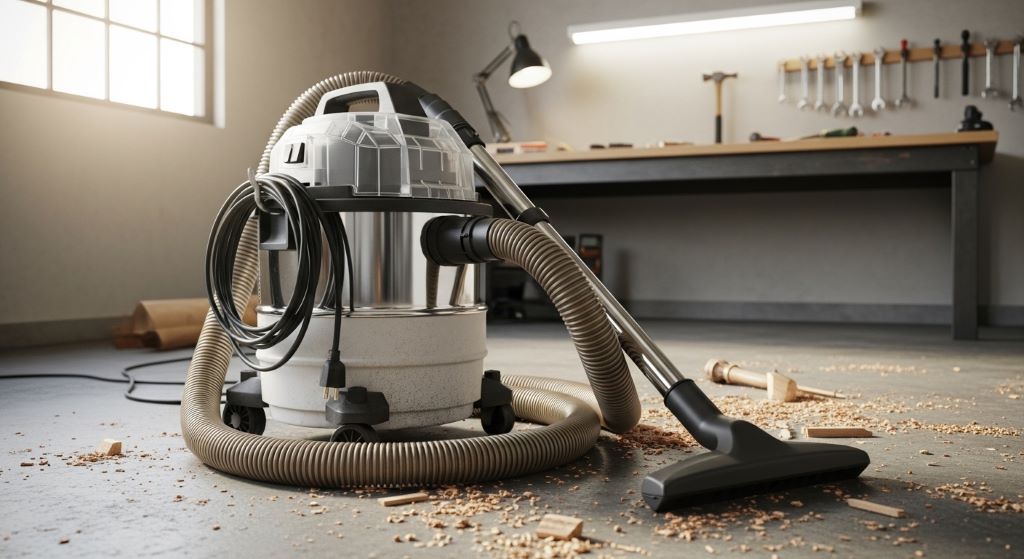
The hose is your main connection to the debris on the floor. A short hose limits your reach and forces you to drag the vacuum constantly. Look for a hose of at least 6 feet. Some budget models include 7 to 8-foot hoses, which makes a noticeable difference in usability.
Attachments extend what the vacuum can do. The most useful ones for garage cleaning include:
- A wide floor nozzle for open areas and concrete floors
- A crevice tool for tight corners and along baseboards
- A brush attachment for surfaces that scratch easily
- A car cleaning kit for interior detailing
Not every vacuum includes all of these out of the box, but many budget options come with a solid starter set. Additionally, most accessories are interchangeable across brands that use standard hose diameters, so you can often buy extras separately at low cost.
Noise Level: Often Overlooked, Always Relevant
Vacuums are loud. In a garage, this may seem less important than indoors, but extended cleaning sessions in an enclosed space can still cause hearing fatigue. Some vacuums exceed 85 decibels, which is the threshold where prolonged exposure begins to affect hearing.
Budget vacuums are not always quiet, but some models are better than others. Check user reviews for noise complaints. A few manufacturers now publish decibel ratings, which makes comparison easier. If noise is a concern, look for models marketed as “quiet” or those with lower motor speeds, keeping in mind that lower speed may slightly reduce suction.
Durability on a Budget
Spending less does not mean settling for something that breaks after a few uses. Durability comes down to materials and build design. Polypropylene and high-density polyethylene tanks hold up well against impact and chemical exposure. Metal-reinforced hoses last longer than all-plastic alternatives.
Read user reviews carefully and filter for long-term feedback — comments from people who have used the vacuum for six months or more are far more valuable than first-week impressions. A reliable garage debris cleaner should last several years with basic maintenance, even at a budget price point.
Additionally, check the availability of replacement parts. Filters, hoses, and nozzles wear out over time. If replacement parts are hard to find or overpriced, even a durable vacuum becomes a problem down the road.
Top Features to Prioritize at a Budget Price
When comparing models in the budget range, focus on these core features in order of priority:
- Suction power of at least 5 HP or 100 CFM for effective pickup
- Wet and dry capability for versatile use
- Tank size of 6 gallons or more
- HEPA or fine dust filtration for cleaner exhaust air
- A hose of at least 6 feet for adequate reach
- Sturdy wheels and a long power cord for easy movement
Any budget vacuum that checks most of these boxes is worth serious consideration. You do not need every premium feature — you just need the right ones for your garage.
Setting a Realistic Budget
For a capable garage vacuum, you can expect to spend between $40 and $120. Models in this range from established brands like RIDGID, CRAFTSMAN, and Vacmaster offer genuine value. They include solid suction, decent tank sizes, and reliable wet/dry capability.
Spending under $40 often means compromising on motor quality or tank size. Spending over $150 moves you into semi-professional territory, which is great for heavy commercial use but likely unnecessary for a home garage.
Therefore, aim for the $60 to $100 sweet spot. In this range, you get a strong suction vacuum with the features that matter most, without paying for extras you will rarely use.
Conclusion
Finding a powerful budget vacuum for your garage comes down to knowing what actually matters. Prioritize suction power, wet/dry capability, filtration quality, and tank size above everything else. Make sure the hose is long enough, the wheels roll smoothly, and the build quality is solid enough to last.
You do not need to overspend to get a great result. With a budget between $60 and $100, there are plenty of reliable options that will handle everything your garage throws at them. Take your time comparing models, read user reviews, and focus on real-world performance. Your garage deserves a machine that works as hard as you do.
Frequently Asked Questions
What is the best type of vacuum for a garage?
A wet/dry shop vacuum is the best choice for garages. It handles both dry debris like sawdust and gravel, and wet spills like oil or water. Look for one with strong suction and a tank of at least 6 gallons.
How much suction power do I need for garage cleaning?
For most garage tasks, look for a vacuum with at least 5 HP or 100 CFM. This level of suction is enough to pick up fine dust, larger debris, and wet spills without straining the motor.
Can I use a regular household vacuum in the garage?
Generally, no. Household vacuums are not built for the heavy, coarse material found in garages. They can clog quickly, and their motors are not designed for wet pickup. A dedicated garage debris cleaner is a much better investment.
How often should I replace the filter on a garage vacuum?
It depends on how often you use it and what you clean. For regular garage use, inspect the filter every few sessions and replace it every 3 to 6 months. Fine dust clogs filters faster, so check more frequently if you do woodworking or sanding.
Are budget garage vacuums reliable long-term?
Yes, many budget models from reputable brands are quite reliable. The key is to buy from an established brand, check user reviews for long-term feedback, and confirm that replacement parts like filters and hoses are readily available.
Related Topics:
How to Diagnose Automobile HVAC Blend Door Actuator Failure
How to Lubricate Moving Parts for Optimal Performance and Longevity