
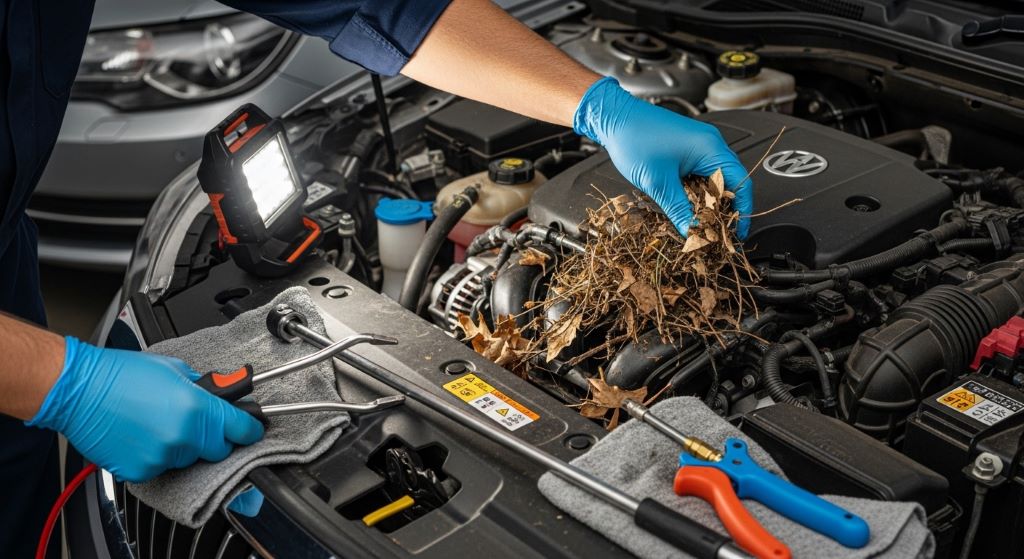
Have you ever stepped out of your car and caught a strange burning smell? It can be alarming. However, before you panic, it is worth knowing that one of the most common causes is surprisingly simple: debris stuck in your engine bay.
Leaves, plastic bags, pine needles, and even small twigs can collect in the engine bay over time. When these materials come into contact with hot engine parts, they burn. The result is that unsettling burning odor that makes every driver nervous. The good news is that this problem is usually easy to fix on your own. This article will walk you through everything you need to know.
Why Debris Collects in Your Engine Bay
Most cars are not perfectly sealed under the hood. There are gaps and vents designed to allow airflow for cooling. Unfortunately, these same openings also let in leaves, grass clippings, bird feathers, and other outdoor debris.
Additionally, parking under trees is a very common habit. If you park outside regularly, natural materials will find their way into your engine bay almost inevitably. Parking near construction sites can also introduce sawdust, insulation foam, and other flammable materials.
Therefore, even if you drive a clean, well-maintained car, debris buildup can still happen. It is not a sign of neglect. It is simply a result of normal driving conditions.
How Debris Causes a Burning Smell
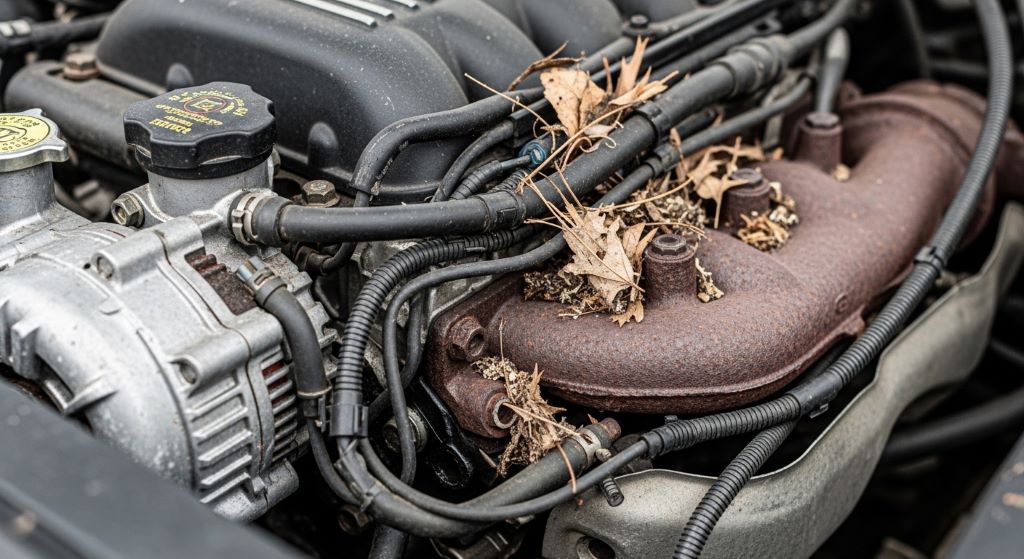
Once debris enters the engine bay, it tends to settle on surfaces that get extremely hot. The exhaust manifold, for example, can reach temperatures between 600 and 1,000 degrees Fahrenheit during normal operation. Leaves or plastic resting on this surface will begin to smolder almost immediately.
Similarly, the catalytic converter runs very hot and sits close to the underside of the car. Debris that falls onto this component will produce a strong, acrid smell that travels straight into the cabin.
However, not all burning smells from debris are dramatic. Some are mild and intermittent. You might notice the smell only when the engine first warms up. This typically means a small amount of material is present and is slowly burning off. Still, it is best to address it promptly rather than ignore it.
Identifying the Source of the Smell
Before you start cleaning, it helps to identify exactly where the debris is located. Here is how to do that safely.
First, let your car cool down completely. Never open the hood while the engine is still hot. Touching hot components can cause serious burns. Give it at least 30 to 45 minutes after driving before you inspect anything.
Once the engine is cool, open the hood and look around carefully. Use a flashlight to get a good look at corners, crevices, and the tops of engine components. Pay special attention to areas around the exhaust manifold, the engine block itself, and near the air intake.
Additionally, check the area near the firewall at the back of the engine bay. Leaves and debris tend to pile up in this low-traffic zone. You should also check under the car near the catalytic converter if the smell seems to come from below.
Tools You Will Need
You do not need fancy equipment to clean out debris from your engine bay. Here is a simple list of what will help:
- A flashlight or headlamp for visibility
- Heat-resistant gloves to protect your hands
- Long-nose pliers or a grabbing tool for tight spots
- A soft brush or paintbrush to sweep loose material
- A vacuum with a hose attachment for finer debris
- A garden hose or low-pressure water spray for a final rinse (optional)
These items are either already in your home or inexpensive to buy. Therefore, this is a very cost-effective repair to handle yourself.
Step-by-Step Guide to Removing Debris from the Engine Bay
Step 1: Let the Engine Cool Completely
Safety comes first. Park your car on a flat surface and turn off the engine. Wait at least 30 to 45 minutes. If the car has been on a long drive, wait longer. A hot engine bay can burn you quickly, so patience is essential here.
Step 2: Open the Hood and Inspect
Pop the hood and prop it up securely. Use your flashlight to scan the entire engine bay. Look for clumps of leaves, feathers, dry grass, or plastic debris. Note the locations of anything you find before you start removing it.
Step 3: Remove Large Pieces by Hand
Put on your gloves and start picking out the largest pieces first. Use your hands for anything easy to reach. For material wedged into tight spots, use the long-nose pliers or a grabbing tool. Work slowly and carefully so you do not accidentally knock anything loose inside the engine.
Step 4: Use a Brush or Vacuum for Smaller Debris
Once the big pieces are gone, switch to your soft brush. Gently sweep smaller debris toward you so you can remove it easily. A vacuum works well for fine particles like dried leaf dust, pine needles, and dirt. Run the vacuum hose along seams, ledges, and the firewall area.
Step 5: Rinse If Needed
If there is still fine dust and grime present, a gentle rinse can help. However, be careful. You should never spray water directly onto electrical components, sensors, fuse boxes, or the alternator. If you are unsure, skip the water entirely. A dry cleaning is often sufficient for debris removal.
Step 6: Start the Engine and Monitor
After cleaning, close the hood and start the car. Let it idle for five to ten minutes. Stay nearby and check for any remaining burning smell. In most cases, the odor will be completely gone or significantly reduced within the first few minutes of running. If the smell persists after cleaning, there may be another underlying issue that needs attention.
When the Burning Smell Is Not from Debris
It is important to know that not every burning smell points to debris. Therefore, if you have cleaned the engine bay thoroughly and the smell remains, consider these other possible causes:
An oil leak onto the exhaust is a very common culprit. Oil that drips onto hot metal burns and produces a thick, dark smell. Similarly, a coolant leak can produce a sweet, slightly chemical burning odor. A burning rubber smell might suggest a slipping drive belt or a melting hose.
Additionally, an electrical burning smell, which tends to smell like burning plastic or copper wire, may point to a short circuit or overheating wiring. These issues are more serious and should be inspected by a qualified mechanic without delay.
Preventing Future Debris Buildup
Once you fix the problem, prevention is the next logical step. Here are some simple habits that will help keep your engine bay debris-free:
- Avoid parking under large trees, especially in autumn when leaves fall heavily
- Check your engine bay at least once a month during fall and spring seasons
- Install a mesh screen over engine air intake openings if debris is a persistent issue
- Keep your garage clean so debris does not blow in while the car is parked
These small habits can save you a lot of trouble over time. Additionally, regular visual checks give you the chance to spot other potential problems early, such as loose wires or small leaks.
How Often Should You Clean Your Engine Bay?
For most drivers, a thorough engine bay inspection every three to six months is adequate. However, if you park outdoors regularly or live in an area with lots of trees, a monthly check is a smarter choice.
Furthermore, cleaning after any major weather event is a good idea. Strong winds can blow surprising amounts of debris under the hood in a very short time. A quick five-minute check can prevent that debris from ever reaching a hot surface and causing a smell.
Conclusion
A burning smell from your car can feel frightening, but when debris is the cause, it is one of the easiest automotive problems to solve. Debris naturally accumulates in the engine bay over time, especially if you park outside. When leaves, plastic, or other flammable material touches hot components like the exhaust manifold or catalytic converter, a burning smell is the result.
The fix is straightforward: let the engine cool, open the hood, and remove the debris carefully using gloves, a brush, and a vacuum. After cleaning, start the car and check whether the smell has gone. In most cases, it will have disappeared entirely.
However, if the smell continues after a thorough cleaning, it may indicate a more serious issue such as an oil leak, electrical fault, or coolant problem. In that case, a professional inspection is the safest route. Prevention through regular checks and smart parking habits will also help you avoid the problem in the future. By staying proactive, you can keep your engine bay clean and your drives worry-free.
Frequently Asked Questions
Is a burning smell from debris in the engine bay dangerous?
It can be. While small amounts of debris usually just smolder and produce a smell, a larger buildup can potentially start a fire if it lands on a very hot surface like the exhaust manifold. Therefore, you should address the issue as soon as possible rather than waiting.
How long does the burning smell last after removing the debris?
In most cases, the smell fades within a few minutes of running the engine after you have removed the debris. If the material burned onto a surface, it may take one or two short drives for the residue to fully burn off. However, the smell should weaken noticeably with each drive.
Can debris in the engine bay damage my car?
Yes, it can. Beyond the smell, debris can block airflow and cause the engine to run hotter than normal. It can also clog filters, trap moisture, and in extreme cases, lead to a small engine fire. Regular cleaning prevents these risks.
Should I use a pressure washer to clean my engine bay?
It is generally not recommended. High-pressure water can force moisture into electrical connectors, sensors, and the fuse box, which can cause damage. A gentle garden hose spray or a dry cleaning method is much safer.
What if the burning smell started after driving through leaves or tall grass?
This is very common. Dry leaves and grass can get sucked into the engine bay or pile up under the car near the exhaust system. Pull over when it is safe, let the engine cool, and inspect the underside as well as the engine bay for any accumulated material.
Related Topics:
One-Car Garage on a Budget? 7 Affordable Metal Garage Options You Won’t Believe
Boosting Your Vehicle’s Resale Value with Professional Auto Detailing Services