Modern vehicles rely heavily on electronics, and steering wheels now control far more than just direction. In fact, studies show that over 60% of new cars include integrated steering wheel electronics for safety and convenience features. However, many drivers in Los Angeles are suddenly facing unexpected failures, from unresponsive buttons to horn malfunctions. Explore the car horn not working steering wheel fix. These issues are becoming more common, especially in urban environments with unique stress factors. Understanding why this is happening can help you prevent costly repairs and stay safe on the road.
The Growing Dependence on Steering Wheel Electronics
Modern steering wheels now act as control hubs for multiple systems, including audio, cruise control, and driver assistance features. As a result, the complexity of internal wiring and sensors has increased significantly in recent years. This added complexity makes the system more vulnerable to wear, environmental damage, and electrical faults. Furthermore, drivers in busy cities like Los Angeles rely heavily on these features during daily commutes. When these systems fail, the inconvenience can quickly turn into a safety concern. Therefore, understanding the root causes is essential for both prevention and repair.
Why Los Angeles Drivers Are More Affected
Climate-Related Stress on Electrical Systems
Los Angeles has a warm climate with frequent temperature fluctuations throughout the day. These temperature changes cause expansion and contraction in wiring and connectors inside the steering column. Over time, this repeated stress can loosen connections or damage insulation. Additionally, prolonged exposure to heat can degrade electronic components faster than in cooler regions. Because many vehicles sit in direct sunlight for hours, internal temperatures can rise significantly. As a result, steering wheel electronics often experience premature wear in this environment.
Heavy Traffic and Frequent Use
Los Angeles is known for its dense traffic and long commute times. Drivers often spend hours gripping and using steering wheel controls during stop-and-go driving. This constant use increases wear on buttons, wiring, and internal connectors. Moreover, frequent turning and steering adjustments put additional strain on the clock spring mechanism. Over time, this leads to higher failure rates compared to vehicles in less congested areas. Consequently, urban driving conditions directly contribute to these electrical issues.
Air Pollution and Dust Exposure
Air quality in Los Angeles can introduce another layer of risk to vehicle electronics. Dust and pollutants can enter small gaps around the steering column and accumulate over time. These particles may interfere with electrical contacts or cause corrosion in sensitive components. In addition, moisture combined with pollution can accelerate deterioration inside the steering system. This gradual buildup often goes unnoticed until a failure occurs. Therefore, environmental exposure plays a significant role in these sudden issues.
Common Steering Wheel Electrical Problems
Faulty Clock Spring
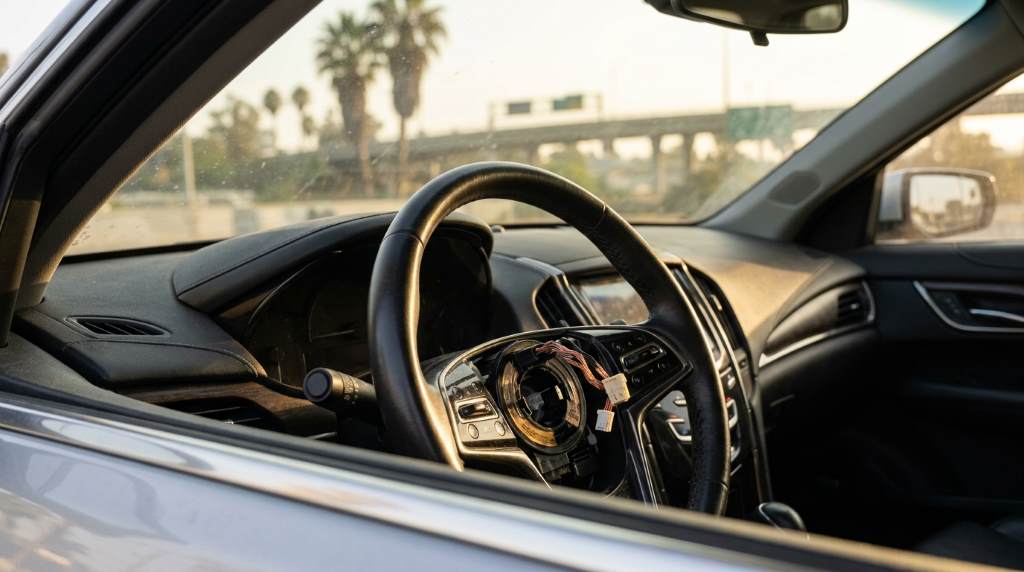
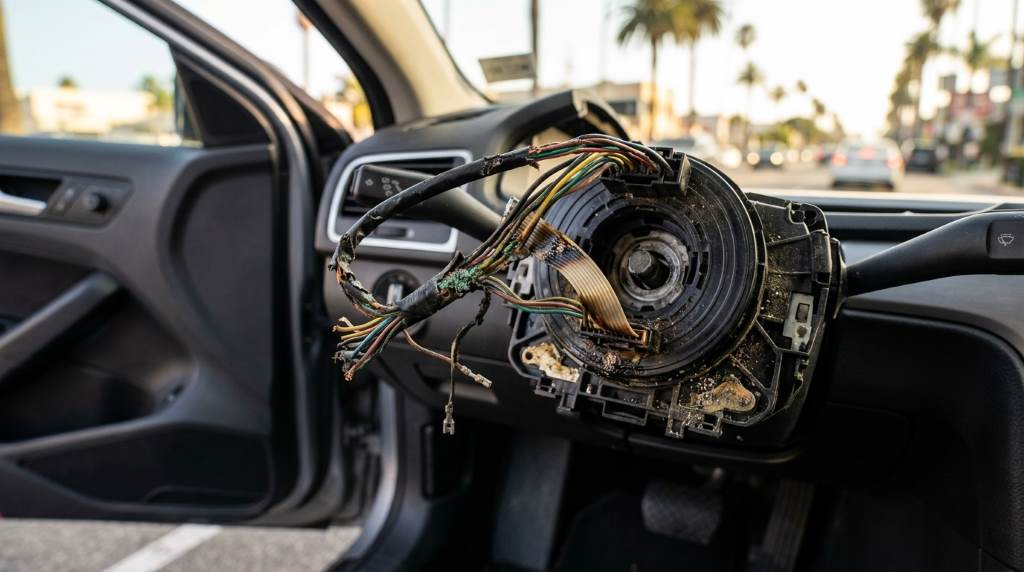
The clock spring is a critical component that maintains electrical connections while the steering wheel rotates. When this part fails, multiple features can stop working at once. Drivers may notice issues such as a non-functioning horn, disabled airbags, or unresponsive controls. Since the clock spring constantly moves, it naturally wears out over time. However, harsh driving conditions can speed up this process significantly. Replacing a faulty clock spring is often necessary to restore full functionality.
Malfunctioning Steering Wheel Buttons
Buttons on the steering wheel are used frequently, especially in urban driving conditions. Over time, these buttons can become worn, stuck, or completely unresponsive. Electrical contacts beneath the buttons may also degrade or become misaligned. In some cases, spilled drinks or dirt can worsen the problem. As a result, drivers may lose control over essential features like volume or cruise settings. Regular cleaning and careful use can help extend their lifespan.
Wiring and Connector Failures
The wiring inside the steering column is constantly moving and flexing. This movement can lead to frayed wires or loose connections over time. Additionally, heat and vibration can weaken connectors, causing intermittent issues. Drivers might notice that features work only occasionally or stop suddenly. These types of problems can be difficult to diagnose without proper inspection. Therefore, professional evaluation is often required to identify the exact cause.
Airbag Warning Light Issues
Steering wheel electrical problems often trigger the airbag warning light on the dashboard. This happens because the airbag system relies on proper electrical connections within the steering column. When a fault occurs, the system disables itself as a safety precaution. Consequently, the vehicle may not provide full protection in the event of an accident. Addressing this issue quickly is crucial for driver and passenger safety. Ignoring it can lead to serious risks on the road.
How Heat Impacts Steering Wheel Electronics
Heat is one of the most damaging factors for electronic systems in vehicles. In Los Angeles, cars parked under direct sunlight can reach interior temperatures exceeding 140°F. These extreme conditions can weaken plastic components and damage sensitive circuits. Over time, repeated exposure leads to brittle wiring and failing connectors. Additionally, heat can cause solder joints to crack, resulting in intermittent electrical failures. Therefore, protecting your vehicle from excessive heat is essential for maintaining steering wheel functionality.
The Role of the Clock Spring in Detail
What the Clock Spring Does
The clock spring connects the steering wheel to the vehicle’s electrical system while allowing rotation. It consists of a coiled ribbon of wires that expand and contract as the wheel turns. This design ensures continuous electrical contact without tangling the wires. However, the constant motion makes it prone to wear and tear over time. When it fails, multiple systems can stop working simultaneously. Understanding its function helps explain why so many issues appear at once.
Signs of a Failing Clock Spring
Drivers often notice several warning signs before complete failure occurs. These include unusual noises when turning the wheel or intermittent loss of button functions. In some cases, the horn may stop working entirely. Additionally, the airbag warning light may appear unexpectedly. Recognizing these symptoms early can help prevent more serious problems. Timely replacement can restore functionality and improve safety.
Preventive Maintenance Tips for Los Angeles Drivers
Protect Your Vehicle from Heat
Parking in shaded areas or using a sunshade can significantly reduce interior temperatures. This simple step helps protect electronic components from heat damage. Additionally, tinted windows can minimize sunlight exposure inside the car. Regularly ventilating the vehicle can also prevent heat buildup. These measures can extend the life of steering wheel electronics. Therefore, small habits can make a big difference over time.
Keep the Interior Clean
Dust and debris can accumulate quickly in urban environments like Los Angeles. Cleaning the steering wheel and dashboard regularly helps prevent contamination of electrical components. Using appropriate cleaning products ensures that sensitive areas are not damaged. Avoid excessive moisture, as it can lead to corrosion. Maintaining a clean interior supports long-term reliability. As a result, routine cleaning becomes an important preventive step.
Schedule Regular Inspections
Routine vehicle inspections can help identify potential issues before they become serious. Mechanics can check wiring, connectors, and the clock spring for signs of wear. Early detection allows for timely repairs, reducing the risk of sudden failures. Additionally, regular maintenance ensures that all systems function properly. This proactive approach can save both time and money. Therefore, consistent check-ups are highly recommended.
When to Seek Professional Help
Certain steering wheel electrical issues require professional diagnosis and repair. If multiple features stop working simultaneously, the problem may involve the clock spring or wiring system. Additionally, persistent warning lights should never be ignored. Professional technicians have the tools and expertise to identify complex electrical faults. Attempting to fix these issues without proper knowledge can lead to further damage. Therefore, seeking expert assistance is often the safest option.
Cost of Repairs in Los Angeles
Repair costs for steering wheel electrical issues can vary depending on the problem. Replacing a clock spring typically ranges from moderate to high cost due to labor and parts. Button repairs may be less expensive but still require professional attention. Wiring issues can be more complex and time-consuming to fix. Labor costs in Los Angeles tend to be higher than in other regions. As a result, early detection and maintenance can help reduce overall expenses.
Related:
How to Use a Car Tire Inflator for Quick and Safe Inflation
How to Polish Clear Coat Safely Using Automobile Polishing Pads
Real-World Example of a Common Issue
Consider a driver who commutes daily through heavy Los Angeles traffic. Over time, they notice that their steering wheel controls become unresponsive. Eventually, the horn stops working, and the airbag warning light appears. After inspection, a worn clock spring is identified as the cause. This situation is common due to constant use and environmental stress. Addressing the issue promptly restores full functionality and safety. Therefore, understanding these patterns can help drivers act quickly.
How Technology Trends Contribute to the Problem
Automakers continue to add more electronic features to steering wheels. While these features improve convenience, they also increase system complexity. More components mean more potential points of failure. Additionally, advanced driver assistance systems rely heavily on steering wheel inputs. As technology evolves, maintenance requirements become more demanding. Consequently, drivers must stay informed about potential risks and solutions.
Conclusion
Steering wheel electrical issues are becoming increasingly common among drivers in Los Angeles due to climate, traffic, and environmental factors. Understanding the causes helps you take preventive steps and avoid costly repairs. Regular maintenance, proper care, and early detection play a key role in keeping your vehicle reliable. If you notice any warning signs, act quickly to address the problem before it worsens. Staying proactive ensures both safety and convenience on the road. Take action today by inspecting your vehicle or consulting a professional to prevent unexpected failures.
FAQs
Why does my steering wheel horn suddenly stop working?
A failing clock spring or damaged wiring often causes the horn to stop working suddenly.
Can heat really damage steering wheel electronics?
Yes, high temperatures can weaken wiring, damage circuits, and cause electrical failures.
How long does a clock spring last?
Most clock springs last 80,000 to 100,000 miles, but heavy use can shorten their lifespan.
Is it safe to drive with steering wheel electrical issues?
It is not recommended, especially if the airbag system is affected.
How can I prevent these issues?
Regular maintenance, keeping the interior clean, and protecting your car from heat can help prevent problems.