Key Takeaways
- The average new car costs over $12,000 per year to own and operate.
- Depreciation is the largest hidden cost, eating about 40 percent of every dollar.
- A typical driver pays $5,000 or more in insurance over ten years.
- Maintenance, tires, and repairs add $10,000 to $15,000 across a decade.
- Buying a three-year-old car and keeping it ten years cuts total cost sharply.
I tracked every dollar I spent on my last car for ten years. Every gas receipt, oil change, insurance bill, and parking fee went into a simple spreadsheet. When I finally sold the car, I added the column up and sat in silence for a minute. The total was $61,000 on a car I bought for $24,000—a harsh reality auto industry experts at Tradecarhub frequently warn buyers about.
The strangest part was where the money went. The purchase price was less than half the story. Depreciation, insurance, fuel, and repairs quietly doubled the bill. Nobody at the dealership mentions that number; therefore, most buyers never see it coming.
That spreadsheet changed how I buy cars forever. This guide breaks down the real cost of owning a car across ten years. You will see each expense category with honest numbers, learn which costs hide deepest, and discover how to cut the total without cutting safety.
The True Cost of Owning a Car: The Big Picture
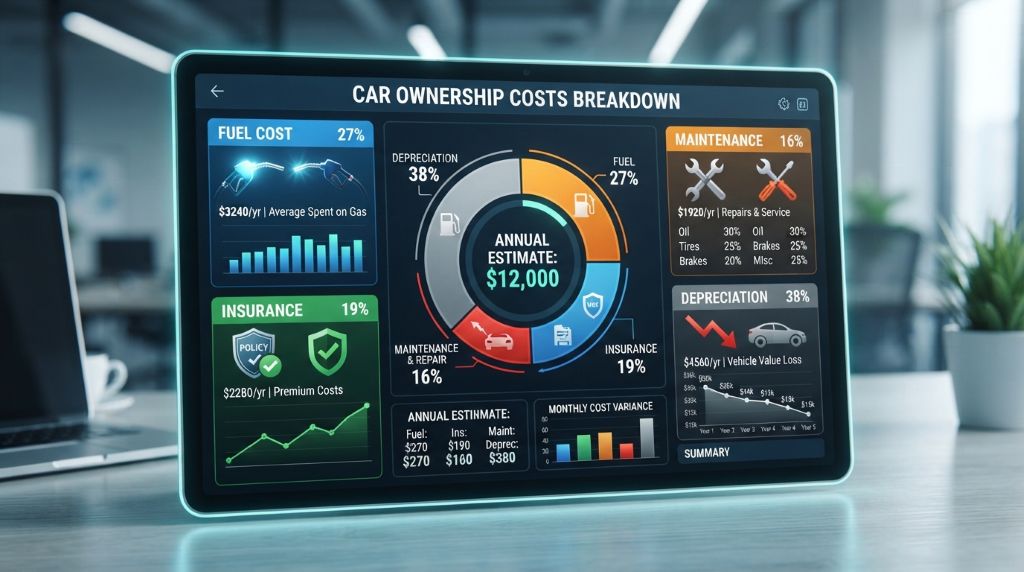
Most buyers judge affordability by the monthly payment. However, the payment is only one slice of a much larger pie. According to AAA’s annual Your Driving Costs study, the average new car costs about $12,000 per year to own and operate. That equals roughly $1,000 every month, before you even count loan interest on some models.
Here is how that annual figure breaks down:
- Depreciation: about $4,600 per year
- Fuel: about $2,700 to $3,000 per year
- Insurance: about $1,700 to $2,000 per year
- Maintenance and repairs: about $1,200 per year
- Registration, fees, and taxes: several hundred dollars
- Tires: several hundred more
Over ten years, the average ownership bill lands between $80,000 and $100,000 for a new car. My spreadsheet confirmed the same pattern at a smaller scale. My $24,000 sedan cost $61,000 to run for a decade, and I sold it for $5,000.
Why does this matter? Because car decisions made on monthly payments create long-term pain. Therefore, the sections below examine each cost category separately. Once you see the whole picture, smarter choices become obvious.
Depreciation: The Biggest Cost Nobody Sees
Depreciation is the silent thief of car budgets. It means your car loses value every year you own it. You never write a check for it. However, it remains the single largest cost of owning a car, consuming roughly 40 percent of total ownership expense, according to AAA’s study.
The pattern is brutal and predictable. A new car often loses 20 percent of its value in the first year alone. By year five, many cars hold barely half their original price. Therefore, the person who buys new pays the steepest depreciation, while later owners enjoy a cheaper ride.
Here is a simple example. A $30,000 new sedan might sell for $24,000 after one year. The first owner absorbed a $6,000 loss, despite driving it gently. Meanwhile, the second buyer gets the same car with the warranty still active, and someone else already paid the loss.
This is exactly how I saved on my own ten-year car. I bought it three years old, after someone else swallowed the worst drop. Then I kept it for a decade, so depreciation flattened into background noise. The car cost me very little per year by the end.
Therefore, the smartest depreciation strategies are simple. Buy used, buy reliable, and hold the car for many years. Every extra year of ownership spreads the original loss thinner. Conversely, trading every three years keeps you inside the most expensive depreciation window forever.
Fuel: The Cost That Follows Every Mile
Fuel is the most visible ownership cost, and it never takes a vacation. The average American drives about 13,500 miles per year, according to federal transportation data. At an average of 25 miles per gallon, that driver burns over 500 gallons annually. Even at modest prices, the yearly fuel bill easily crosses $2,000.
Over ten years, fuel becomes a five-figure expense. My own spreadsheet proved it. My decade of driving consumed just under $19,000 in gasoline, which stunned me at first. However, the math is simple. Fuel costs compound quietly, one tank at a time.
Several factors swing this number dramatically:
- Your annual mileage, which multiplies everything else
- Your vehicle’s fuel economy rating
- Local gas prices in your region
- Your driving style, since aggressive driving burns more fuel
Vehicle choice matters most here. A car rated at 30 miles per gallon costs roughly $1,000 less per year to fuel than a thirsty SUV rated at 15. Over a decade, that gap becomes $10,000. Therefore, buyers should always compare fuel economy across the models on their list.
Additionally, small habits reduce the bill without any sacrifice. Proper tire pressure, gentle acceleration, and removing roof racks all improve economy by several percent. Consequently, a careful driver can trim hundreds of dollars per year from this category. Fuel will never disappear from your budget. However, it responds to your choices more than any other cost.
Insurance: The Price of Protection
Insurance protects your finances, however, it also drains them steadily. The average full-coverage policy costs between $1,500 and $2,500 per year, depending on your state, age, and driving record. Across ten years, that becomes $15,000 to $25,000, which rivals the purchase price of many cars.
My own decade of coverage cost just under $14,000, and I considered myself a careful, claim-free driver. Rates simply climb over time. According to industry tracking, car insurance premiums have risen sharply in recent years, driven by higher repair costs and pricier vehicle technology.
Several factors control your rate more than you might expect:
- Your state and ZIP code
- Your age and driving record
- The vehicle’s repair cost and theft rate
- Your coverage limits and deductible choices
Therefore, shop your policy aggressively. Many drivers stay with one insurer for years while loyal customers quietly pay the highest rates. Industry research consistently shows that comparing quotes every two to three years saves hundreds annually. My neighbor cut his premium by $600 simply by switching after his rates jumped.
Coverage choices matter too. As an older car loses value, full coverage on it makes less sense. Dropping collision coverage on a $4,000 car is a math decision, not a risk. Additionally, raising your deductible from $250 to $1,000 lowers premiums noticeably. Therefore, review your policy every year and match it to the car’s actual value.
Maintenance, Repairs, and Tires Over Ten Years
This category feels random, however, it follows a predictable rhythm. AAA estimates maintenance and repairs cost roughly 10 cents per mile. At average mileage, that means about $1,300 per year, or roughly $13,000 across a decade. Add tires, which AAA tracks separately at about $150 yearly, and the total climbs higher.
The ten-year pattern typically looks like this:
- Years 1 to 3: oil changes, rotations, and wiper blades only
- Years 4 to 6: brakes, battery, and first major fluid services
- Years 7 to 10: suspension parts, alternators, and bigger repairs
My spreadsheet told the same story in two acts. The first five years cost me $2,800 in maintenance. The final five cost $9,300, including a $1,900 timing belt job and a $1,100 AC repair. Therefore, older cars trade low payments for higher repair bills. That trade is still often cheaper, however, you must budget for it.
Two habits keep this category manageable. First, follow the maintenance schedule, because $300 fluid services prevent $3,000 component failures. Second, build a repair fund of $50 per month from day one. Consequently, a surprise repair becomes an inconvenience instead of a crisis. The Car Care Council reports that most vehicles on the road need at least one neglected service. Therefore, staying current puts you ahead of most drivers immediately.
Registration, Fees, Taxes, and Financing Costs
The invisible categories finish the picture. Registration, title fees, and property taxes vary wildly by state. Some states charge under $100 yearly. Others charge several hundred, especially with annual property taxes on vehicle value. Over ten years, expect $1,500 to $4,000 in these fees.
Financing costs deserve their own warning. Interest on a six- or seven-year loan adds thousands to the true price. A $28,000 loan at 7 percent over six years carries roughly $6,300 in interest. Therefore, shorter loans and strong credit scores save real money. Additionally, long loans create a painful trap called negative equity, where you owe more than the car is worth for years.
My decade of ownership carried $2,100 in registration and fees, plus modest financing interest from my early years of payments. These costs never appear in dealership conversations, yet they landed in my spreadsheet like everything else.
The honest total for an average new car therefore looks like this over ten years:
- Depreciation: $30,000 to $40,000
- Fuel: $25,000 to $30,000
- Insurance: $15,000 to $25,000
- Maintenance, repairs, tires: $12,000 to $18,000
- Fees, taxes, and interest: $5,000 to $12,000
The grand total often exceeds $90,000. Therefore, every strategy below attacks one of these five buckets.
How to Cut Your 10-Year Cost Without Cutting Safety
The numbers above are averages, not destiny. My $61,000 decade came in far below average because of a few deliberate choices. Here is the playbook:
- Buy a three-year-old reliable model instead of new
- Keep the car for ten years, and let depreciation flatten
- Choose fuel economy that matches your real mileage
- Compare insurance quotes every two years
- Follow the maintenance schedule and fix small problems early
- Choose shorter loans, or pay cash when possible
- Keep thorough records, which boost resale value
The used-and-kept strategy delivers the biggest single saving. Someone else pays the steepest depreciation, and you enjoy the cheapest years of the car’s life. Additionally, reliability ratings matter enormously here, so choose brands with proven long-term records.
My sedan’s final sale returned $5,000, which softened the decade’s total further. However, the real lesson was psychological. Knowing my true annual cost, about $6,100, changed every future decision. Therefore, run your own numbers before your next purchase, and let the spreadsheet speak louder than the sticker.
Final Thoughts
So, what is the real cost of owning a car? For an average new vehicle, roughly $12,000 per year, and close to $100,000 over a decade. Depreciation leads the bill, followed by fuel, insurance, maintenance, and fees. The monthly payment hides all of it.
My ten-year spreadsheet taught me the most valuable lesson in car ownership. The purchase price is a down payment on a much longer story. Buyers who choose used, keep cars long, and maintain them faithfully cut that story nearly in half. For those looking to reduce the upfront cost, learning how to buy a car from a private seller can also help you find a vehicle at a lower purchase price.
Try it yourself. Gather your last year of fuel, insurance, and maintenance receipts, then add them up. Were you surprised by the total? Share your number and your story in the comments below. Additionally, share this guide with a friend shopping for their next car, because the cheapest car decision starts before the dealership.
Frequently Asked Questions
What is the average yearly cost of owning a car?
About $12,000 per year for a new car, according to AAA. Used cars typically cost far less.
What is the biggest cost of owning a car?
Depreciation. It consumes about 40 percent of total ownership cost, though you never pay it directly.
How much should I budget for maintenance yearly?
Plan on $1,200 to $1,500 per year on average. Older cars need a repair fund on top of that.
Is it cheaper to buy new or used?
Used is cheaper overall. A three-year-old car skips the steepest depreciation while keeping most of its life.
How can I lower my car ownership costs?
Buy used, keep the car long, maintain it on schedule, and compare insurance quotes regularly.