To fix frozen car pipes in Denver, first stop the engine and thaw the cooling system gradually in a warm place. Never pour boiling water over frozen components or drive until you confirm the coolant flows normally. Denver averages about 31.7°F in January, while January 2026 reached a low of -6°F. Even owners researching top campervan models should understand these winter protection steps before driving in Colorado.
Start With the Right Diagnosis
The phrase frozen car pipes usually describes frozen coolant passages, hoses, washer lines, or another fluid line. However, coolant freezing creates the greatest mechanical risk because expanding fluid can damage the engine block or cooling system.
First, look for clear warning signs before touching anything. A solid hose, visible ice around the coolant reservoir, poor cabin heat, or an overheating warning can indicate trouble.
Next, check whether the vehicle sat outside during an unusually cold night. Denver can experience sharp temperature drops, so a previously healthy system can reveal weak antifreeze protection quickly.
If you notice coolant leaking underneath the vehicle, stop troubleshooting and arrange professional service. A leak can lower coolant protection and allow freezing temperatures to damage exposed components.
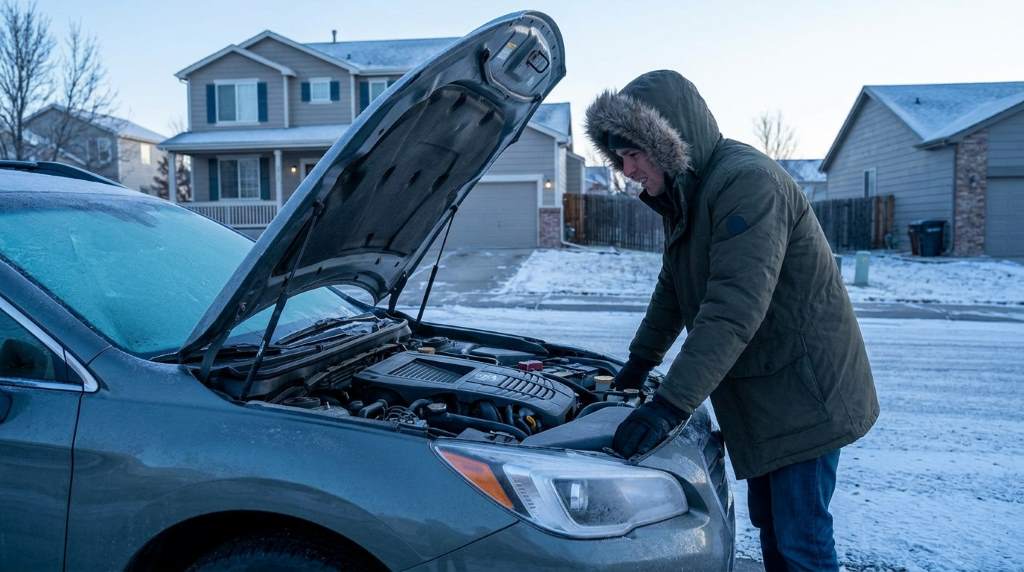
Move the Car Into a Warmer Location
The safest first repair step involves moving the vehicle into a heated garage or another protected location. A warmer environment allows frozen fluid to thaw gradually without creating sudden temperature changes.
If the engine still starts normally, do not assume the system remains safe. Frozen coolant can restrict circulation, and running the engine can create localized overheating around blocked passages.
Therefore, leave the engine off until you know the coolant has completely thawed. If you need better winter storage protection, consider these protecting your RV investment ideas for enclosed vehicle storage.
When a heated garage remains unavailable, contact roadside assistance or a qualified technician. Avoid improvised heating methods that could damage plastic parts, wiring, paint, hoses, or nearby fuel components.
What Not to Use for Thawing
Avoid open flames, propane heaters placed close to the engine, heat guns held against hoses, and boiling water. These methods can create fire hazards or cause thermal shock to vulnerable components.
Instead, let surrounding air provide gradual heat whenever possible. Patience costs less than replacing a cracked radiator, hose, thermostat housing, or engine component.
Check the Coolant Before Starting the Engine
Once the vehicle warms up, inspect the coolant reservoir while the engine remains completely cool. The coolant should appear liquid rather than slushy, and the level should sit between the marked limits.
Then inspect hoses, clamps, the radiator area, and the reservoir for cracks or fresh leaks. AAA recommends checking coolant when the engine remains cold and adding the correct coolant mixture when necessary.
A properly mixed coolant system provides much stronger freeze protection than plain water. For example, a common 50/50 antifreeze mixture can protect to approximately -34°F, although your vehicle requires the coolant specification stated by its manufacturer.
Do not automatically add water because the reservoir looks low. Adding plain water can weaken freeze protection and increase the chance of another freeze during the next cold snap.
Use a Coolant Tester
A coolant tester provides a practical way to estimate freeze protection before you drive. Follow the tester instructions carefully and test only when the cooling system has cooled completely.
If the reading shows inadequate protection, correct the mixture using the manufacturer specified coolant. If the coolant looks contaminated, rusty, oily, or unusually thick, schedule a cooling system inspection.
Thaw Frozen Washer and Fluid Lines Safely
Not every frozen car pipe carries engine coolant. Windshield washer lines can freeze when owners use summer fluid or dilute winter fluid with excessive water.
Move the vehicle somewhere warmer and allow the washer reservoir and lines to thaw naturally. Do not keep holding the washer switch because the pump can work against frozen fluid.
After thawing, replace unsuitable fluid with a winter rated windshield washer solution. AAA specifically recommends winter washer fluid instead of plain water because water can freeze and block the system.
For broader winter preparation, review these winter tips for van drivers. The same basic fluid checks can help many passenger vehicles handle Denver cold.
Test the Washer System After Thawing
Start the washer system only after the fluid becomes completely liquid. Spray briefly and confirm that both nozzles produce a normal stream.
If the pump makes noise without spraying fluid, stop testing repeatedly. A frozen section may remain inside the hose, nozzle, or reservoir outlet.
Clear blocked nozzles with gentle methods recommended by the vehicle manufacturer. Never force sharp objects deep into delicate washer components.
Inspect Hoses, Radiator, and Expansion Areas
Freezing fluid expands, which can place unusual pressure on hoses, fittings, reservoirs, and engine cooling passages. AAA warns that frozen coolant can contribute to engine block cracking and other serious damage.
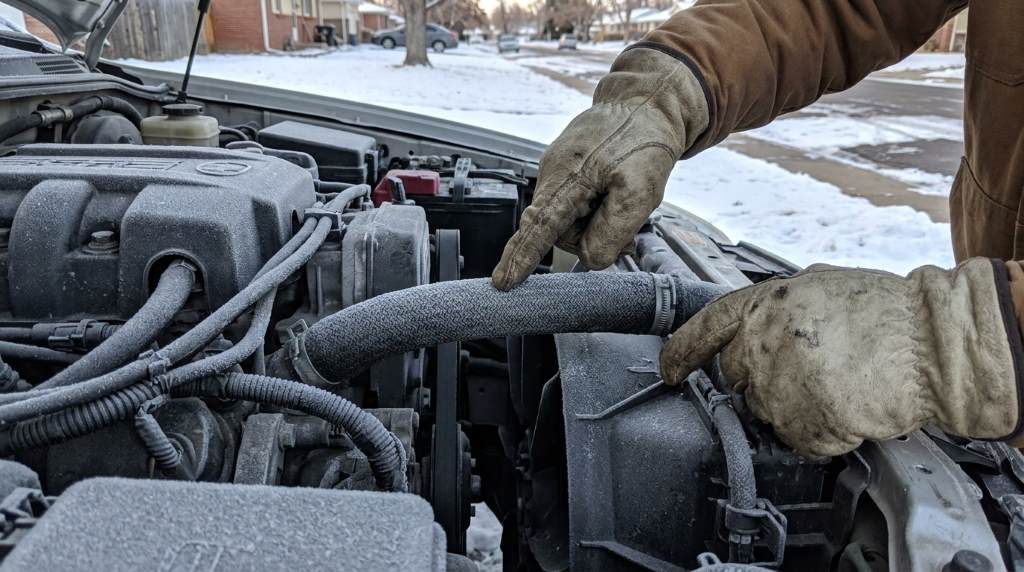
After thawing, squeeze accessible coolant hoses gently when the engine remains cold. A severely swollen, cracked, brittle, or unusually soft hose deserves professional inspection before driving.
Also examine the radiator and coolant reservoir for cracks or wet areas. Small leaks can become larger when the cooling system reaches normal operating pressure.
Look beneath the vehicle for fresh green, orange, pink, yellow, blue, or otherwise colored fluid. Coolant color varies by formula, so identify the fluid by location and vehicle service information rather than color alone.
Check for a Hidden Freeze Problem
Sometimes the reservoir appears liquid while a deeper cooling passage remains partially frozen. This situation can restrict coolant circulation after the engine starts.
Therefore, do not rely only on the reservoir appearance. Give the entire vehicle enough time to warm gradually before checking the system again.
If the temperature gauge rises quickly after startup, shut the engine down immediately. Continuing to drive can turn a simple frozen fluid problem into major engine damage.
Restart the Vehicle Only After Thawing
Once the cooling system has fully thawed and you find no obvious leaks, start the engine and let it idle. Watch the temperature gauge while listening for unusual noises from the engine bay.
The cabin heater can provide another useful clue during this process. Normal heat production suggests coolant circulation, although it does not prove that every cooling passage works correctly.
After several minutes, inspect the temperature behavior carefully. If the gauge climbs rapidly, the heater stays cold, steam appears, or coolant leaks, shut the engine off.
At that point, arrange professional diagnosis instead of attempting a longer drive. A technician can pressure test the cooling system and identify restrictions, leaks, or damaged components.
When You Should Not Drive
Do not drive the vehicle when any of these conditions appear:
- Coolant leaks continue after thawing.
- The temperature gauge rises unusually fast.
- The engine produces steam or heavy vapor.
- The coolant reservoir or radiator shows damage.
- The engine runs roughly after the freeze.
- The vehicle repeatedly loses coolant.
These symptoms can indicate damage that requires inspection before normal operation. A short tow is usually safer than risking a failed cooling system on the road.
Prevent Frozen Car Pipes During Denver Winters
Prevention works better than emergency thawing, especially when temperatures fall below the coolant’s protection range. Denver’s historical winter climate includes severe cold, while January 2026 reached -6°F.
Before a major cold spell, check coolant concentration and inspect the cooling system for leaks. Also replace damaged hoses, weak clamps, cracked reservoirs, and worn radiator caps before winter conditions intensify.
Use the vehicle manufacturer’s recommended coolant rather than selecting a formula based only on color. Modern vehicles can require specific coolant technologies, and compatibility matters for long term cooling system performance.
If you regularly park outdoors, use a sheltered parking location whenever practical. A garage reduces exposure to prolonged extreme cold and can make winter maintenance much easier.
A Simple Denver Winter Checklist
Complete these checks before the next deep freeze:
- Test coolant freeze protection.
- Confirm the coolant level when cold.
- Inspect hoses and clamps.
- Check the radiator and reservoir for leaks.
- Install suitable winter washer fluid.
- Keep the battery properly maintained.
- Park under cover when possible.
- Keep an emergency winter kit inside the vehicle.
These steps reduce the chance of waking up to frozen fluids or discovering a cooling system failure during a cold commute. They also make problems easier to identify before temperatures become severe.
Know When Professional Repair Makes More Sense
DIY thawing works best when the fluid simply froze without causing damage. However, suspected cracks, persistent leaks, overheating, or repeated freezing require professional diagnosis.
A technician can inspect the cooling system, test pressure, verify coolant concentration, and identify damaged components. This approach also helps determine whether a previous coolant mixture caused inadequate freeze protection.
For owners comparing different campervan setups, cooling system reliability deserves attention alongside other winter considerations. This Indie vs Outlander ratings comparison can provide additional context when evaluating winter capable vehicles.
Do not treat a frozen fluid problem as a minor inconvenience when the engine temperature rises. Professional inspection becomes the safer option whenever the cooling system shows abnormal behavior.
Common Mistakes That Make Freezing Problems Worse
Several quick fixes can create more damage than the original freeze. Understanding these mistakes helps you respond calmly during a cold Denver morning.
- Starting a vehicle with suspected frozen coolant can cause overheating.
- Pouring boiling water onto components can create thermal shock.
- Adding plain water can weaken antifreeze protection.
- Mixing incompatible coolant formulas can create maintenance problems.
- Driving with a rising temperature gauge can cause severe engine damage.
- Using open flames near the engine creates an unnecessary fire risk.
Instead, thaw gradually, inspect carefully, and verify the fluid condition before normal driving. When uncertainty remains, professional service provides a safer answer than guesswork.
Conclusion: Fix the Freeze Before You Drive
To fix frozen car pipes in Denver, move the vehicle into a warmer location, allow gradual thawing, and inspect the cooling system afterward. Then verify coolant protection, check for leaks, and restart only when the system appears fully liquid and intact.
Most importantly, never ignore overheating, leaks, damaged hoses, or abnormal engine behavior after a freeze. If your vehicle shows any serious warning signs, contact a qualified automotive technician before driving farther.
Before the next Denver cold snap, test your coolant and replace weak components. A few preventive checks can protect your engine, reduce roadside problems, and keep your winter commute moving.
FAQs About Frozen Car Pipes in Denver
Can car coolant freeze in Denver?
Yes, coolant can freeze when its mixture lacks sufficient antifreeze or temperatures fall below its protection range.
Can I start my car if the coolant froze?
No, avoid starting the engine until the cooling system completely thaws and you inspect it for damage.
How do I thaw frozen coolant safely?
Move the vehicle into a warm location and let the cooling system thaw gradually without direct high heat.
Can frozen coolant damage an engine?
Yes, expanding frozen coolant can damage hoses, radiators, cooling passages, and potentially the engine block.
How can I prevent frozen pipes next winter?
Maintain the correct coolant mixture, repair leaks promptly, and protect the vehicle from prolonged extreme cold.